
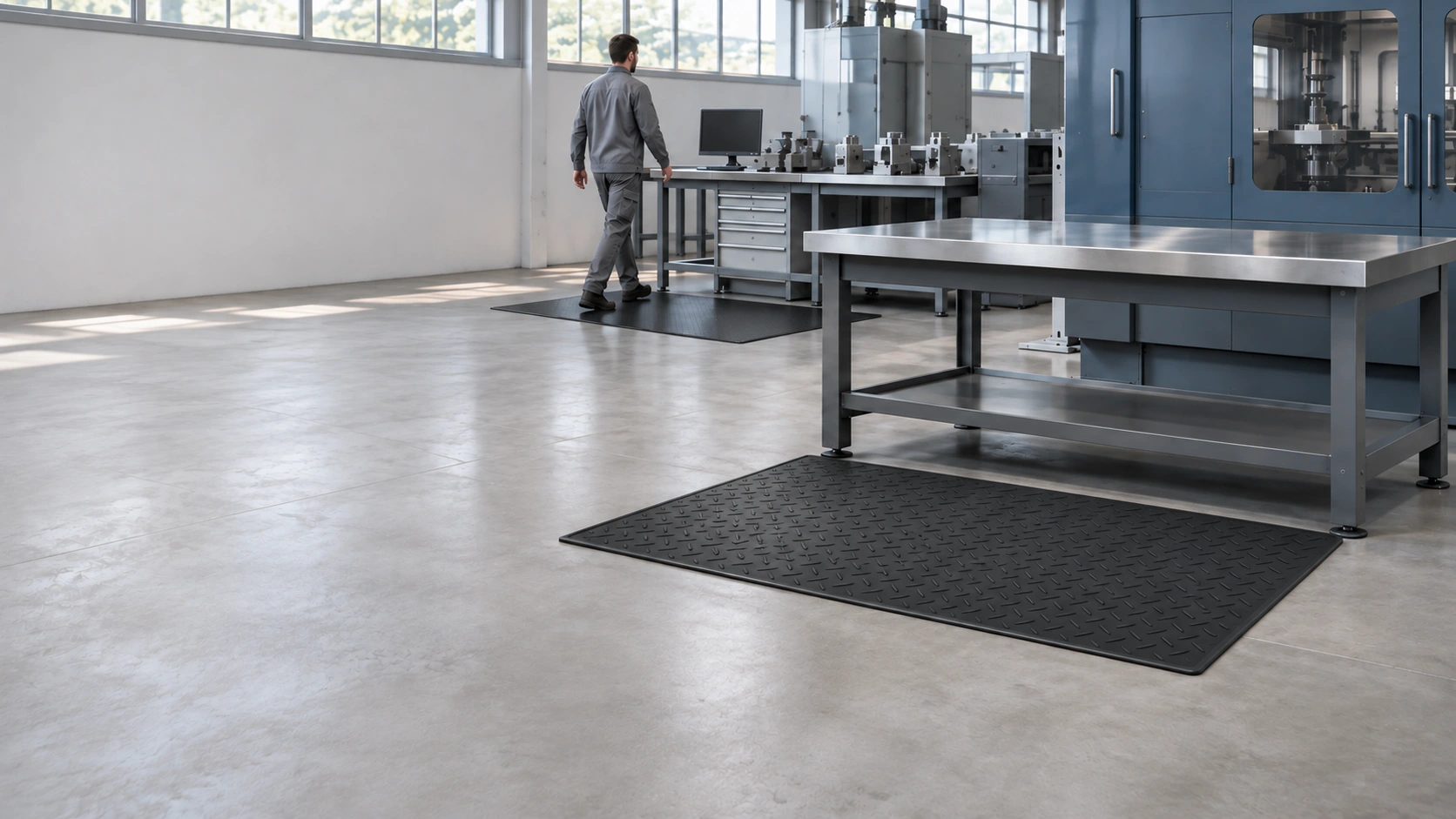
Anti-fatigue
mats
Workstation comfort,
in the shape you need.
For people who spend long hours standing. A soft surface, with its shape and covering defined around the workspace.
Standing at work.
With greater comfort.
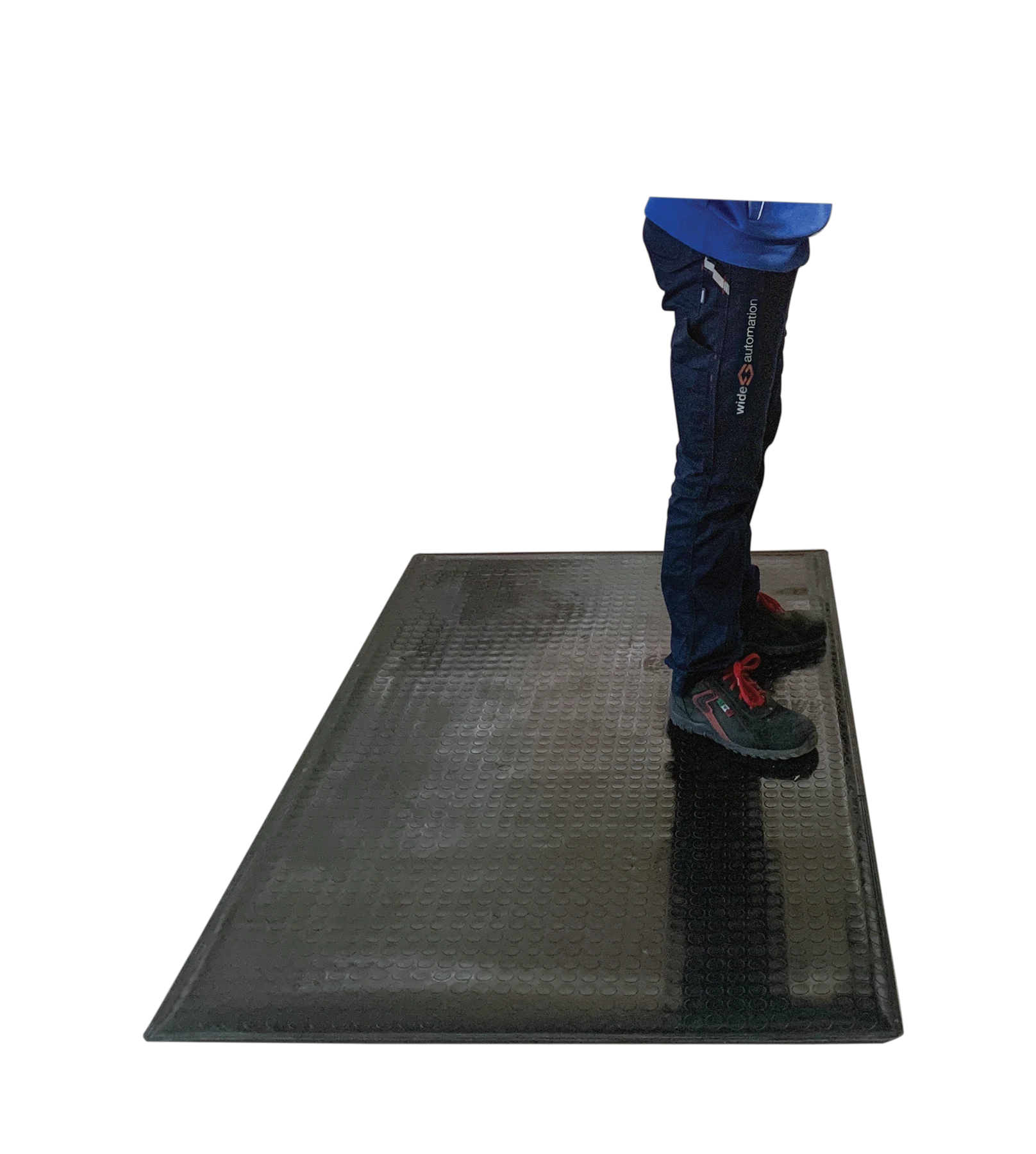
Where people spend many hours standing, the surface underfoot matters. An anti-fatigue mat adds a soft layer between the floor and the operator to help reduce fatigue.
We start with the workstation: the available space, the movements and the area where comfort is needed. The mat takes shape around these requirements.
Shape and dimensionsComfort starts
underfoot.
Contact with the surface
A rigid floor does not yield underfoot. A mat with appropriate compliance changes the conditions of foot support and can improve comfort during standing work.
In a study of 16 volunteers performing 60 minutes of standing work, an anti-fatigue mat increased centre-of-pressure excursions compared with a rigid floor. This concerns the foot–surface interaction; it is not a measurement of the WIDE product.
Winberg et al. / Applied Ergonomics, 2022The support system
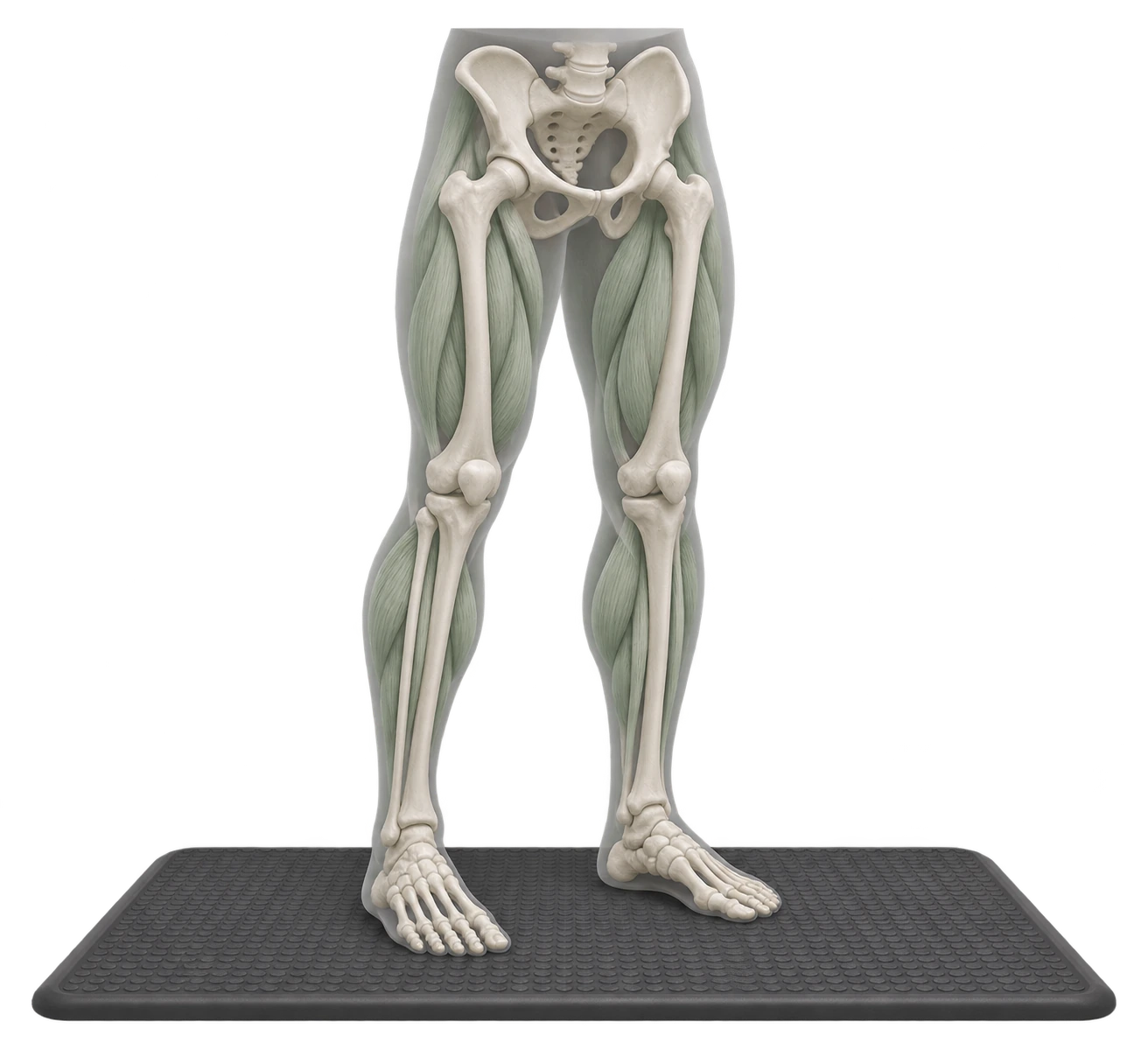
Remaining in the same position for long periods restricts movement at the ankles, knees and hips. Shifting stance and alternating positions shares the work across different structures: the mat belongs within a workstation that allows movement.
CCOHS recommends frequent position changes: varying posture reduces strain on individual structures and helps blood supply to working muscles.
CCOHS / standing workThe role of the muscles
Maintaining an upright position requires muscle activity. Prolonged static standing can contribute to fatigue and blood pooling in the lower limbs. Surface, opportunities to move and breaks should be designed together.
OSHA lists anti-fatigue mats, footrests and opportunities to alter posture among interventions for static standing work. The mat is part of the solution alongside workstation organisation.
OSHA / static posture and lower limbsHighlighting is illustrative. Sources address ergonomics and mats studied in the literature, not clinical tests of the WIDE product.
What the research
shows.
The systematic review by Speed, Harris and Keegel found moderate evidence of reduced perceived discomfort and fatigue with cushioning materials. Physiological and biomechanical findings are less consistent: a mat alone does not establish a specific reduction in knee or hip loading.
Your workstation.
Your configuration.
Shape, dimensions and covering are defined around the drawing and operating requirements. The transition to the floor is part of the design too.
Shape and dimensions
A surface designed for the available space.
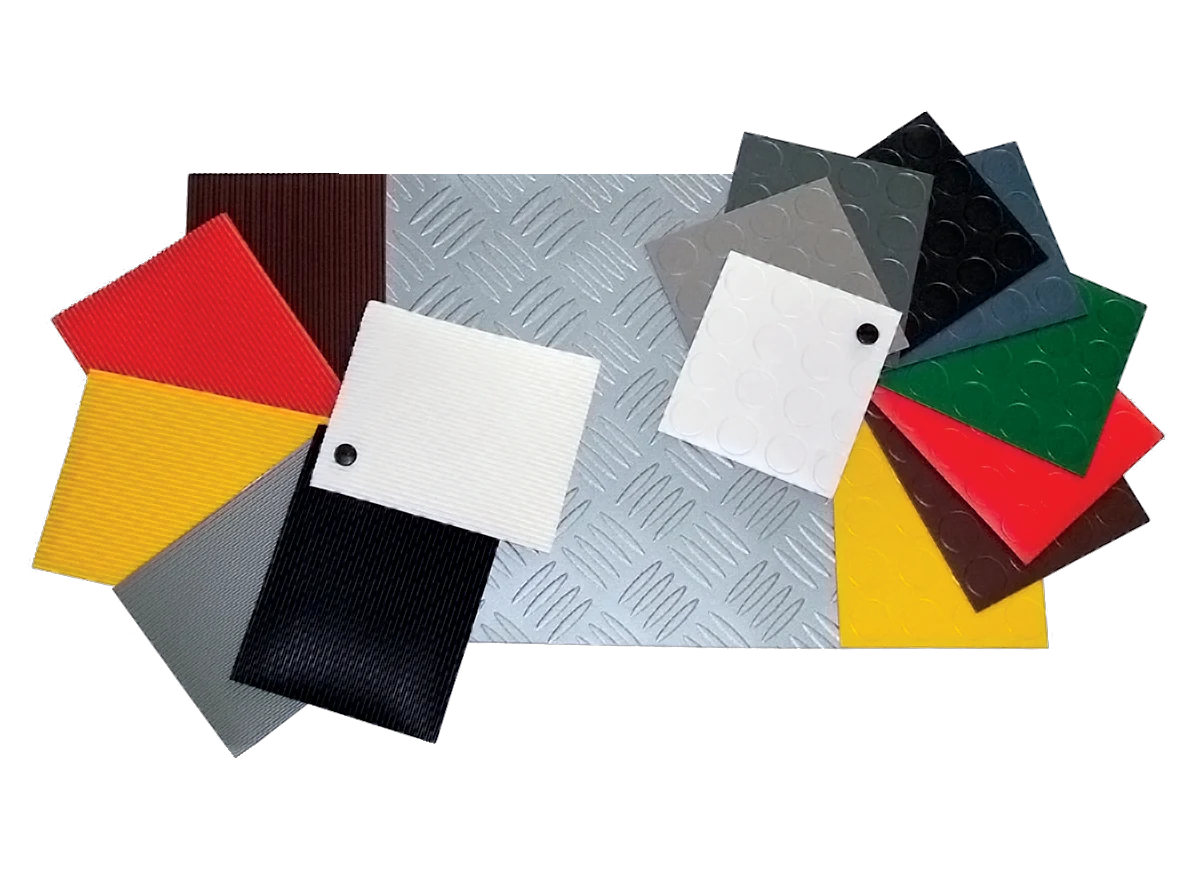
Colours and coverings
Options selected alongside the operating conditions.
Perimeter ramps
Aluminium or PVC options to form the transition between mat and floor.
Start with the workstation
Assessing a mat starts with the available space, the movements involved and the operating conditions. A drawing or sketch helps us begin the discussion.
Request technical informationDimensions, use and operating environmentWhere to start
Is this a pressure-sensitive safety mat?
The function described here is workstation comfort. To detect presence and send a signal to the machine, see our pressure-sensitive safety mat range.
Explore safety matsWhat do you need to assess a custom mat?
A plan or sketch of the workstation, approximate dimensions, the area occupied by the operator and the operating conditions. These give us a starting point for discussing the configuration.
Can the mat have a transition to the floor?
The brochure includes aluminium or PVC perimeter ramps. We assess the transition together with the mat shape, available space and the way people access the workstation.
The design starts
where you work.
Tell us about the workstation, the space and the operating conditions. Together, we can define the mat to start from.
Tell us about your workstation